

The Shift from Chatbots to Digital Coworkers
For the last few years, most people’s experience with artificial
intelligence has been conversational — you type a question, the AI replies. That era is quickly giving way to something bigger: agentic AI.
Instead of just answering prompts, AI agents can now plan tasks, make decisions, use software tools, and complete multi-step workflows with little or no human supervision. They are moving from being passive assistants to becoming, in effect, digital coworkers embedded inside everyday business tools.
This shift is not a distant prediction — it is already happening. Industry analysts expect a large share of enterprise applications to include AI agents by the end of 2026, and a majority of large companies report they have already deployed some form of agentic AI in their operations. For students, professionals, and businesses trying to stay relevant in the digital era, understanding this trend is no longer optional.
In this article, we’ll break down what agentic AI actually is, why it’s exploding in 2026, where it’s already being used, the risks organizations need to manage, and how you can start building the skills this shift demands.
What Is Agentic AI, Exactly?
It helps to separate two terms that are often used interchangeably but mean slightly different things:
- An AI agent is an individual piece of software that can reason, plan, and act autonomously to achieve a specific goal — for example, resolving a customer support ticket or updating inventory records.
- Agentic AI describes the broader system or approach built around these agents, where multiple specialized agents may work together, coordinating across different tools and platforms to complete complex workflows.
The key difference from a traditional chatbot is agency. A chatbot mainly responds to what you type. An AI agent combines reasoning, memory, and the ability to connect with external tools and systems — meaning it can actually take action across multiple platforms rather than simply generating text.
Why Agentic AI Is the Defining Digital Trend of 2026
Several forces are converging to make this the breakout year for autonomous AI agents:
1. Enterprise Adoption Is Accelerating Fast
Analyst projections suggest that a significant portion of enterprise software will embed AI agents by the end of 2026 — a dramatic jump from just a few years earlier, when such capabilities were rare. Surveys of large companies show that most already report some level of agentic AI in production use, not just in pilot testing.
2. The Economic Incentive Is Massive
Consulting firms have estimated that agentic AI could unlock trillions of dollars in economic value over the next several years through productivity gains, faster decision-making, and reduced operational costs. That scale of projected value is why so much investment is flowing into this space right now.
3. No-Code Tools Are Democratizing Agent Building
Agent creation used to require serious programming skill. That barrier is falling. Modern low-code and no-code platforms now let non-technical teams — customer service managers, finance leads, marketing operations — design and deploy their own AI agents through visual interfaces, dramatically widening who can build with this technology.
4. Open Standards Are Maturing
New protocols for how agents communicate with tools and with each other are becoming standard rather than experimental, making it easier for organizations to connect agents across different software systems instead of being locked into a single vendor’s ecosystem.
Where Agentic AI Is Already Being Used
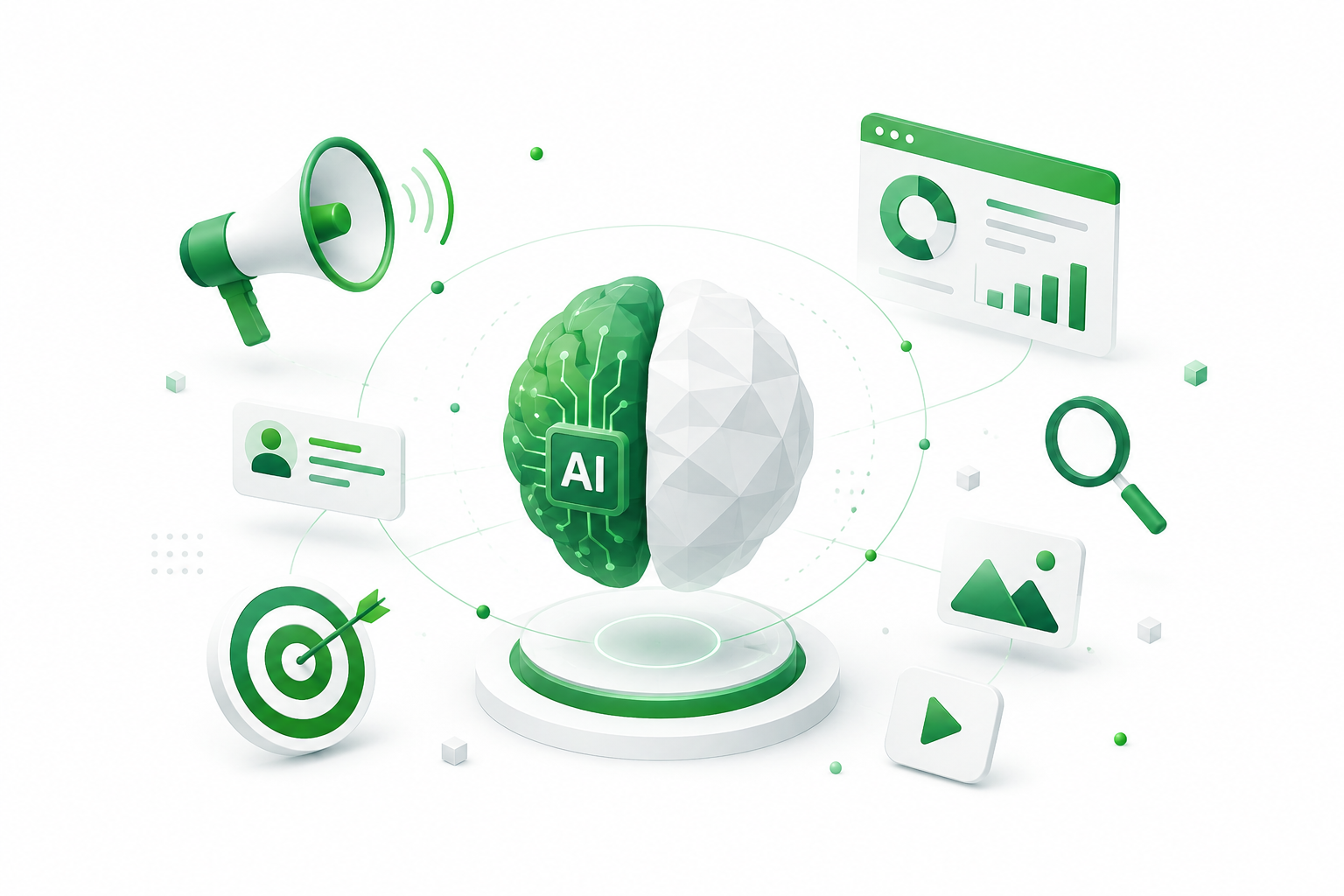
Autonomous agents are moving well beyond simple chat interfaces into real operational roles across industries:
- Customer service — autonomously resolving tickets, processing refunds, and handling escalations
- Finance and operations — invoice matching, expense auditing, and forecasting
- Security and compliance — real-time threat detection, anomaly detection, and policy enforcement
- Sales and marketing — lead generation, personalized outreach, and pipeline management
- Supply chain — inventory optimization, route planning, and demand forecasting
- HR — resume screening, interview scheduling, and candidate evaluation
Contact centers in particular are seeing measurable results, with autonomous agents handling routine “tier-one” queries and freeing human staff to focus on more complex or sensitive interactions.
The Risks: Why Governance Matters as Much as Capability
Agentic AI’s growing autonomy brings real risk alongside its benefits, and industry analysts have been candid about the failure rate ahead. A meaningful share of agentic AI projects are expected to stall or fail in the next couple of years if organizations don’t put proper controls in place.
Common risk areas include:
- Unintended decisions — agents acting outside intended policy boundaries
- Goal misinterpretation — optimizing for the wrong outcome due to unclear instructions
- Runaway costs — agents running continuously without monitoring or spending limits
- Data security exposure — agents accessing multiple systems increases the attack surface
- Lack of transparency — difficulty auditing why an agent made a particular decision
Because of this, most serious enterprise deployments in 2026 still keep a human in the loop — a person who reviews or approves key decisions — rather than granting agents complete, unsupervised control. The organizations succeeding with agentic AI tend to be the ones treating governance and trust as core design requirements, not an afterthought bolted on later.
What This Means for Learners and Professionals
For anyone building a career in the digital and AI era, agentic AI represents both a challenge and an opportunity:
- New skills are in demand. Understanding how to design, prompt, monitor, and govern AI agents is becoming as fundamental a workplace skill as spreadsheet literacy once was.
- Roles are shifting, not disappearing. As routine tasks get automated, human value increasingly concentrates in judgment, strategy, oversight, and handling exceptions the agent can’t resolve alone.
- Cross-functional fluency matters. Because no-code agent-building tools are spreading into non-technical departments, professionals across marketing, finance, HR, and operations — not just engineers — benefit from learning agentic AI concepts.
- Early movers gain an edge. Just as early adopters of digital marketing and cloud computing gained a competitive advantage, professionals who build agentic AI literacy now are positioning themselves ahead of the curve.
Getting Started: A Practical Mindset for 2026
If you’re exploring agentic AI for the first time — whether as a business owner, marketer, or student — a few principles will keep you grounded:
- Start small. Most successful organizations began with a single agent handling one well-defined task before expanding to coordinated, multi-agent systems.
- Keep a human in the loop. Build in review checkpoints for any decision with financial, legal, or customer-facing consequences.
- Measure before you scale. Track cost, accuracy, and time saved before expanding an agent’s scope or autonomy.
- Prioritize open standards. Choosing platforms that support open agent-communication protocols avoids vendor lock-in as the ecosystem matures.
Conclusion
Agentic AI marks a genuine turning point in the digital era — a shift from AI that talks to AI that does. Businesses that treat this moment strategically, balancing autonomy with oversight, stand to gain significant productivity and competitive advantages. For learners and professionals, understanding agentic AI isn’t just about following a trend — it’s about preparing for how work itself is being redefined.
The organizations and individuals who invest in understanding this technology now — its capabilities, its limits, and its governance requirements — will be the ones best positioned to benefit as autonomous AI agents become a standard part of the digital landscape.
Want to build practical, in-demand skills for the AI era? Explore more guides and courses on Etudemy.com to stay ahead of the curve.
Leave a Reply